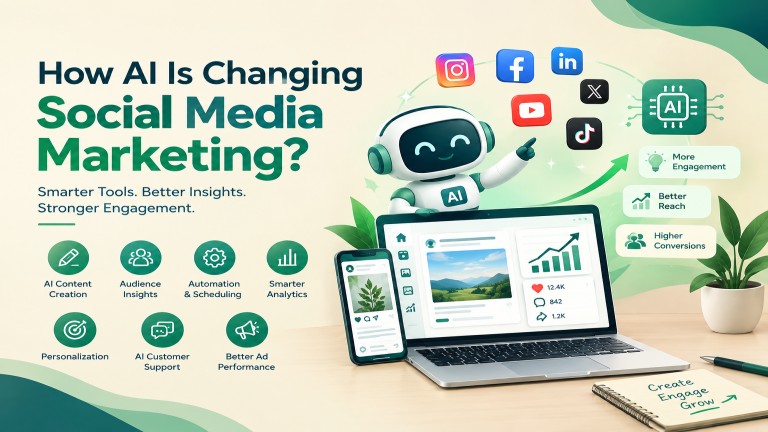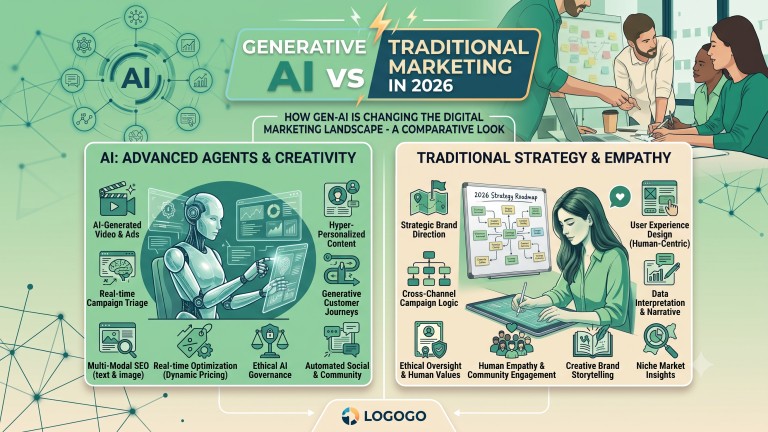
How Generative AI Is Changing Digital Marketing in 2026
How Generative AI Is Changing Digital Marketing in 2026 While initially an experimental technology, generative AI has now become a crucial tool in contemporary digital marketing. In 2026, marketers use AI in audience research, content creation, ad ideation, data analysis, personalization of customer experience, and optimization of marketing processes. Marketing platforms have been adding AI to their core offerings as well. For instance, Google has been scaling its Gemini-powered features on Search, YouTube, Google Ads, Analytics, and commerce. Similarly, Meta has been deploying AI throughout its advertising, creative, recommendation, and business messaging offerings. For brands, all of this translates into faster, more personalized, and data-driven digital marketing.But generative AI goes beyond creating content based on prompts. The key point here is that marketers use AI to combine creativity, customer intelligence, automation, and decision-making. Let’s talk about how generative AI is transforming digital marketing in 2026. What Is Generative AI in Digital Marketing? Generative AI is a type of artificial intelligence that can create new content based on instructions and available information. In digital marketing, generative AI can help create: Blog posts and articles Social media captions Email campaigns Ad copy Images and creative concepts Video ideas and scripts Product descriptions Marketing reports Customer responses Campaign ideas However, AI is increasingly being used beyond content generation. Modern marketing tools can also use AI to identify opportunities, analyze performance, personalize experiences, and support campaign decisions. Google describes this shift as moving from marketing automation toward marketing intelligence. 7 Ways Generative AI Is Changing Digital Marketing in 2026 1. AI Is Transforming Content Creation Content creation is one of the most visible uses of generative AI. Instead of starting every piece of content from scratch, marketers can use AI to brainstorm topics, create outlines, generate first drafts, rewrite copy, adapt content for different audiences, and produce multiple variations. For example, a single blog article can be transformed into: Instagram posts LinkedIn content Email newsletters Short video scripts Ad copy Infographic ideas This can significantly reduce repetitive work. However, businesses should not publish generic AI-generated content without review. Human expertise, original insights, fact-checking, brand voice, and editing remain important. Google has also clarified that its Search spam policies apply to generative AI responses and that content created primarily to manipulate search rankings can violate its policies. 2. AI Is Changing SEO and Search Search is becoming more conversational and AI-driven. Google is integrating generative AI into Search experiences, while businesses are also thinking about visibility across AI-powered search systems. This means SEO is increasingly about more than simply targeting keywords. Marketers should focus on: Helpful and original content Clear answers to user questions Strong topical coverage Search intent Structured content Trustworthy information Technical SEO Good user experience Google’s 2026 Search updates include guidance around generative AI features and preferred sources in AI Overviews and AI Mode. This is also contributing to the growth of strategies commonly described as GEO (Generative Engine Optimization) and AEO (Answer Engine Optimization). 3. AI Is Making Advertising More Intelligent Generative AI is transforming the way companies create, manage and optimize online advertising. Google is introducing AI-powered ad capabilities across Search and YouTube, including solutions to create, generate, optimize, measure and converse with ads. Marketers can benefit from AI in advertising in several ways, such as: generating multiple headlines for an adcoming up with different descriptionsdeveloping creative ideasidentifying audience opportunitiesanalyzing the performance of a campaignrecognizing areas of improvementpersonalizing messages Google has also unveiled new AI-powered features such as Ask Advisor, which enable marketers to analyze information and take action across its marketing platforms.This means that instead of spending time on minor tasks related to advertising, marketers can focus on strategic initiatives and decision-making. 4. AI Is Personalizing Customer Experiences Customers expect businesses to provide relevant information quickly. Generative AI can help businesses create more personalized experiences based on customer needs, questions, interests, and interactions. For example, AI can help marketers develop different versions of: Landing pages Email messages Product recommendations Advertisements Social media content Customer communications AI-powered conversational experiences are also becoming part of advertising and lead generation. Google is testing Business Agent for Leads in India, allowing potential customers to interact with an AI-powered brand agent directly within certain ad experiences. This can help businesses answer questions before a customer reaches the sales team. 5. AI Is Changing Social Media Marketing Social media marketers can use generative AI throughout the content creation process. AI can help with: Content ideas Captions Hashtags Short-form video scripts Creative concepts Content calendars Audience research Performance analysis Content variations Meta has also been expanding AI capabilities across its platforms, including creative generation, advertising optimization, recommendations, and business messaging. But AI should not make every brand sound the same. The strongest social media strategies still need: Human creativity + brand personality + AI efficiency. 6. AI Is Improving Marketing Analytics Digital marketers create a lot of data about their websites, ads, social media, emails, and customer interactions. But this data can be too much to handle. With generative AI, marketers could leverage insights from all of this data to get actionable and easy-to-understand analyses. Marketers could rely on AI-driven insights to identify: • The most effective campaigns • The most profitable audiences • The content that resonates • The acquisition channels • The customer journey drop-off points • And other factors that require optimization Google is also investing in AI and agentic features in Google Ads and Analytics to help marketers discover optimization opportunities and take action faster and easier. But the critical takeaway is that while artificial intelligence can help analyze data faster, human double-checking and smarter decision-making are still essential. 7. AI Is Creating New Advertising Channels One of the biggest developments in 2026 is the emergence of AI-native advertising experiences. OpenAI, for example, has expanded advertising capabilities in ChatGPT, including tools for advertisers and new conversational experiences. Its September 2026 announcement described Sponsored Agents that allow people to start a clearly labeled conversation with a participating business after interacting with an