Author name: Manas

Social media marketing trends 2026
Uncategorized

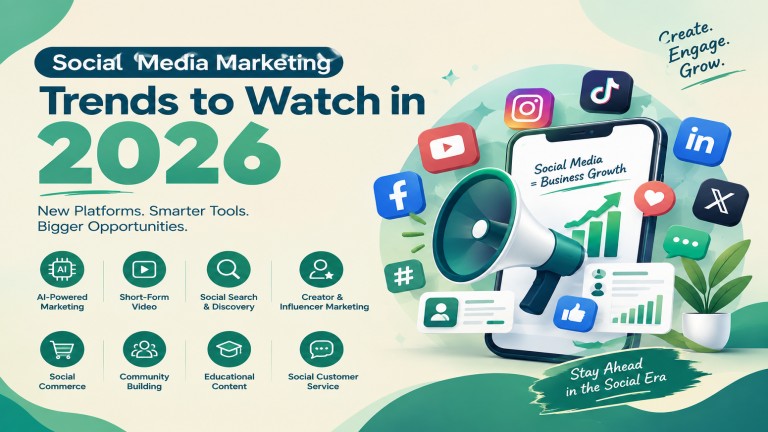
Social Media Marketing Trends to Watch in 2026

Social Media Marketing Trends to Watch in 2026 Social media marketing is constantly evolving. From being a source of entertainment and means of communication, social networks are now venues for product searches, information retrieval, research, creator discovery, brand comparisons, and purchases. Therefore, in 2026 social media marketing trends prioritize quality, authenticity, artificial intelligence (AI), communities, search, and customer experience. This way, beyond simply accumulating likes, businesses need to invest in creating content that can attract the target audience and convert it into customers through engagement and other strategies. But what should companies focus on while developing social media strategies this year? Let’s take a look at the biggest social media marketing trends in 2026. AI Will Become a Bigger Part of Social Media Marketing Artificial intelligence is becoming an increasingly prominent part of the social media content creation process. It can be leveraged for brainstorming, analyzing the audience, writing posts, creating variations, studying statistics, and personalization. However, it does not mean that all companies should rely on exclusively AI-produced content. The better approach is to be found in the combination of artificial intelligence and human input. While the former can be used as a tool to make the creation process more efficient, the latter is still the driving force behind successful social media posts. How businesses can use AI How businesses can utilize artificial intelligenceCompanies can benefit from using artificial intelligence to helpcome up with content ideas,analyze performance,generate variations of posts,research topics of interest to the target audience,enhance captions and headlines,automate repetitive tasks,personalize marketing efforts,andsupport social media customer service. Businesses should use artificial intelligence as a marketing assistant rather than a replacement for human creativity. Short-Form Video Will Continue to Lead Short-form video is currently one of the most in-demand content forms for social media marketing. Instagram Reels, TikTok, YouTube Shorts, and many other modes of short video content creation allow brands to quickly and efficiently deliver a message to their target audience. In 2026, companies should strive to create fewer but more informative videos to engage with their customers and promote their brand. Educational, product demo, behind-the-scenes, tip, testimonial, and problem-solving videos are a great way to do that. Tips for better short-form videos Grab attention in the first few seconds Keep one clear idea per video Add captions or on-screen text Use a natural speaking style Show products in real situations End with a simple call to action Test different hooks and formats Short videos should be useful, entertaining, or relatable—not just promotional. How to optimize content for social search Use relevant keywords naturally in: Video titles Captions On-screen text Hashtags Descriptions Profile information Spoken content For example, a digital marketing agency could create content around searches such as: “SEO tips for small businesses”“How to run Google Ads”“Social media marketing tips” The goal is to create content that answers the questions your audience is already searching for. Authentic and Human Content Will Matter More As AI-generated content becomes increasingly easy to produce, authentic human content may paradoxically become more valuable. Consumers are craving human touches behind every brand, seeking authenticity, opinions and experience, stories and mistakes, learning and even failures, and results. That is why brands should not aim for overly polished posts Behind the scenes content, employees’ stories and testimonials, the founder’s content, and product showcases help establish trust and connection. Humanize your brand Instead of only saying: “Our service is the best.” Show: How your team works How you solve customer problems What happens behind the scenes Real project processes Customer feedback Lessons learned from experience Authenticity is not about being perfect. It is about being believable and relatable. Creator and Influencer Marketing Will Keep Growing
Future of search with SEO and AI Search
Artificial intelligence

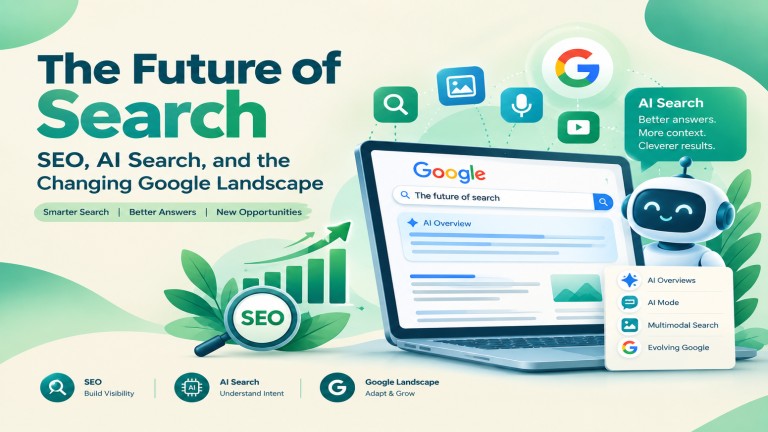
The Future of Search: SEO, AI Search, and the Changing Google Landscape

The Future of Search: SEO, AI Search, and the Changing Google Landscape Search is changing faster than ever. For many years search was relatively simple: a user would type a keyword into Google, get a list of links and click around to find an answer. This is now changing, as Google Search now includes AI-powered experiences, conversational queries, visual search and more ways to find information. Google has also released AI Overviews and AI Mode, and Search Console is evolving its reporting so that website owners have insights into the performance of their website across new search experiences. It does not mean that SEO is dying, but rather, what constitutes a good SEO is now much broader. Businesses now need to think about traditional search visibility, AI answers, user intent, content quality, brand authority and a range of different search behaviours. What Is Changing in Search? The biggest change is that search is becoming more conversational, answer-focused. Rather than searching: “best digital marketing strategies” a user might ask: “What digital marketing strategies should a small business use to generate more customers in 2026?” An AI-powered search can then help provide information organized around the user’s specific question. This provides a different search experience from the traditional list of links. Search is also becoming more multimodal. Google announced in September 2026 that Search Console reporting now includes data from web multimodal searches such as Google Lens, Circle to Search, image uploads, and “Search this image.”    For businesses, this means search optimization is no longer only about text and keywords. The Rise of AI Search AI search is powered by artificial intelligence to comprehend questions, pull information from, and generate or organize answers. Instead of pulling together keywords and links to relevant web pages like traditional search engines, AI-powered systems can have an understanding of the context and combine information from multiple sources. Google’s AI search experiences are a critical part of this transition. Google AI Overviews AI Overviews can provide an AI-generated overview of information for eligible searches. The user can then explore supporting sources or continue searching. Google AI Mode AI Mode provides a more conversational search experience, allowing users to explore topics through follow-up questions and more detailed interactions. Google’s documentation now includes specific guidance for websites appearing in its generative AI search features and notes that established SEO practices continue to be relevant. This is important for businesses because AI search does not eliminate the need for quality websites. It increases the importance of having content that search systems can understand and users can trust. Is Traditional SEO Dead? Traditional SEO is not disappearing. In fact, Google continues to recommend following fundamental SEO practices for its generative AI search experiences. The difference is that SEO is becoming more focused on quality, relevance, helpfulness, and user intent rather than simply targeting a keyword. Traditional SEO still includes: Keyword research Search intent Technical SEO Crawling and indexing Internal linking Website performance Mobile usability Helpful content Structured data Relevant links and mentions Local SEO These fundamentals provide the foundation for visibility in search. The future is not SEO vs AI Search. It is increasingly SEO + AI Search. From Keywords to Search Intent One of the key changes to SEO practices that marketers must understand pertains to the shift from keyword-focused practices to addressing the intent behind the search. Previously one could focus on developing content around one particular phrase, such as: “digital marketing services.” However, today, it is more important than ever to target the actual objective of the searcher, such as: Do they want to hire an agency? Are they searching for a way to compare different players? Do they seek to gain more information on marketing? Are they interested in the cost? Can they get leads? Is a local agency of interest? By doing so, companies are better at addressing the needs and concerns of potential clients. Example Instead of developing a short article focused on the phrase: “SEO agency,” create an extensive guide for “how to choose SEO agency for small business 2026” covering all of the above questions and providing answers and solutions for each of the concerns. The Growing Importance of GEO and AEO The changing search landscape has also led to increased interest in GEO and AEO. What Is GEO? GEO stands for Generative Engine Optimization. It refers to approaches designed to make content useful and understandable in generative AI search experiences. What Is AEO? AEO stands for Answer Engine Optimization. It focuses on providing direct and useful answers to questions. These concepts overlap with traditional SEO. For example, a well-optimized page can: Target relevant search intent Answer important questions Use clear headings Provide original information Explain concepts clearly Include useful examples Demonstrate expertise Make information easy to understand The important point is that businesses don’t necessarily need three completely separate strategies. A strong content strategy can support SEO, AEO, and AI search visibility together. Content Quality Will Matter More Than Content Quantity Generative AI has made content creation much faster. A marketer can now create dozens of articles, social posts, emails, and other assets in a fraction of the time. But producing more content does not automatically produce better results. Google’s spam policies apply to attempts to manipulate both traditional search results and generative AI responses. This makes quality increasingly important. Businesses should focus on creating content that is: Original Accurate Useful Well-researched Relevant Easy to understand Written for people Supported by genuine experience The New Content Formula Instead of: More AI content = More traffic think: Better information + Real expertise + Strong SEO + User value = Sustainable search visibility Search Is Becoming Multimodal Search is no longer limited to typing words into a search box. Users can increasingly search using: Text Images Cameras Voice Videos Conversational questions Google’s September 2026 Search Console update specifically added reporting for web multimodal searches, including Lens, Circle to Search, image uploads, and image-based searches. This creates new opportunities for businesses. How Businesses

GENERATIVE AI VS TRADITIONAL MARKETING IN 2026
Uncategorized

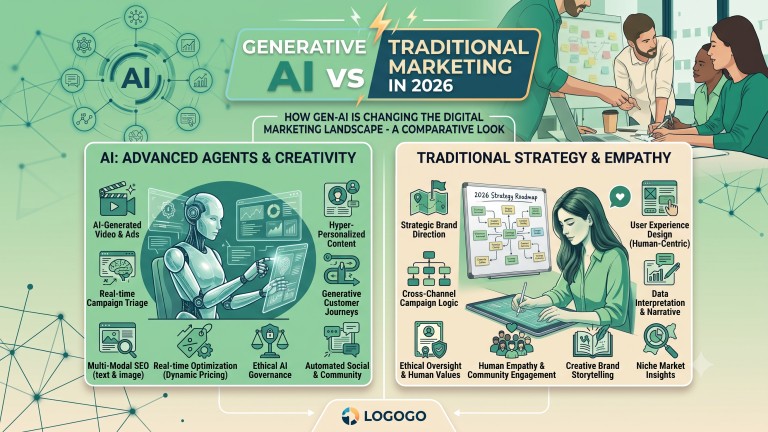
How Generative AI Is Changing Digital Marketing in 2026

How Generative AI Is Changing Digital Marketing in 2026 While initially an experimental technology, generative AI has now become a crucial tool in contemporary digital marketing. In 2026, marketers use AI in audience research, content creation, ad ideation, data analysis, personalization of customer experience, and optimization of marketing processes. Marketing platforms have been adding AI to their core offerings as well. For instance, Google has been scaling its Gemini-powered features on Search, YouTube, Google Ads, Analytics, and commerce. Similarly, Meta has been deploying AI throughout its advertising, creative, recommendation, and business messaging offerings. For brands, all of this translates into faster, more personalized, and data-driven digital marketing.But generative AI goes beyond creating content based on prompts. The key point here is that marketers use AI to combine creativity, customer intelligence, automation, and decision-making. Let’s talk about how generative AI is transforming digital marketing in 2026. What Is Generative AI in Digital Marketing? Generative AI is a type of artificial intelligence that can create new content based on instructions and available information. In digital marketing, generative AI can help create: Blog posts and articles Social media captions Email campaigns Ad copy Images and creative concepts Video ideas and scripts Product descriptions Marketing reports Customer responses Campaign ideas However, AI is increasingly being used beyond content generation. Modern marketing tools can also use AI to identify opportunities, analyze performance, personalize experiences, and support campaign decisions. Google describes this shift as moving from marketing automation toward marketing intelligence. 7 Ways Generative AI Is Changing Digital Marketing in 2026 1. AI Is Transforming Content Creation Content creation is one of the most visible uses of generative AI. Instead of starting every piece of content from scratch, marketers can use AI to brainstorm topics, create outlines, generate first drafts, rewrite copy, adapt content for different audiences, and produce multiple variations. For example, a single blog article can be transformed into: Instagram posts LinkedIn content Email newsletters Short video scripts Ad copy Infographic ideas This can significantly reduce repetitive work. However, businesses should not publish generic AI-generated content without review. Human expertise, original insights, fact-checking, brand voice, and editing remain important. Google has also clarified that its Search spam policies apply to generative AI responses and that content created primarily to manipulate search rankings can violate its policies. 2. AI Is Changing SEO and Search Search is becoming more conversational and AI-driven. Google is integrating generative AI into Search experiences, while businesses are also thinking about visibility across AI-powered search systems. This means SEO is increasingly about more than simply targeting keywords. Marketers should focus on: Helpful and original content Clear answers to user questions Strong topical coverage Search intent Structured content Trustworthy information Technical SEO Good user experience Google’s 2026 Search updates include guidance around generative AI features and preferred sources in AI Overviews and AI Mode. This is also contributing to the growth of strategies commonly described as GEO (Generative Engine Optimization) and AEO (Answer Engine Optimization). 3. AI Is Making Advertising More Intelligent Generative AI is transforming the way companies create, manage and optimize online advertising. Google is introducing AI-powered ad capabilities across Search and YouTube, including solutions to create, generate, optimize, measure and converse with ads. Marketers can benefit from AI in advertising in several ways, such as: generating multiple headlines for an adcoming up with different descriptionsdeveloping creative ideasidentifying audience opportunitiesanalyzing the performance of a campaignrecognizing areas of improvementpersonalizing messages Google has also unveiled new AI-powered features such as Ask Advisor, which enable marketers to analyze information and take action across its marketing platforms.This means that instead of spending time on minor tasks related to advertising, marketers can focus on strategic initiatives and decision-making. 4. AI Is Personalizing Customer Experiences Customers expect businesses to provide relevant information quickly. Generative AI can help businesses create more personalized experiences based on customer needs, questions, interests, and interactions. For example, AI can help marketers develop different versions of: Landing pages Email messages Product recommendations Advertisements Social media content Customer communications AI-powered conversational experiences are also becoming part of advertising and lead generation. Google is testing Business Agent for Leads in India, allowing potential customers to interact with an AI-powered brand agent directly within certain ad experiences. This can help businesses answer questions before a customer reaches the sales team. 5. AI Is Changing Social Media Marketing Social media marketers can use generative AI throughout the content creation process. AI can help with: Content ideas Captions Hashtags Short-form video scripts Creative concepts Content calendars Audience research Performance analysis Content variations Meta has also been expanding AI capabilities across its platforms, including creative generation, advertising optimization, recommendations, and business messaging. But AI should not make every brand sound the same. The strongest social media strategies still need: Human creativity + brand personality + AI efficiency. 6. AI Is Improving Marketing Analytics Digital marketers create a lot of data about their websites, ads, social media, emails, and customer interactions. But this data can be too much to handle. With generative AI, marketers could leverage insights from all of this data to get actionable and easy-to-understand analyses. Marketers could rely on AI-driven insights to identify: • The most effective campaigns • The most profitable audiences • The content that resonates • The acquisition channels • The customer journey drop-off points • And other factors that require optimization Google is also investing in AI and agentic features in Google Ads and Analytics to help marketers discover optimization opportunities and take action faster and easier. But the critical takeaway is that while artificial intelligence can help analyze data faster, human double-checking and smarter decision-making are still essential. 7. AI Is Creating New Advertising Channels One of the biggest developments in 2026 is the emergence of AI-native advertising experiences. OpenAI, for example, has expanded advertising capabilities in ChatGPT, including tools for advertisers and new conversational experiences. Its September 2026 announcement described Sponsored Agents that allow people to start a clearly labeled conversation with a participating business after interacting with an

AI in social media marketing
Uncategorized

How AI Is Changing Social Media Marketing in 2026:

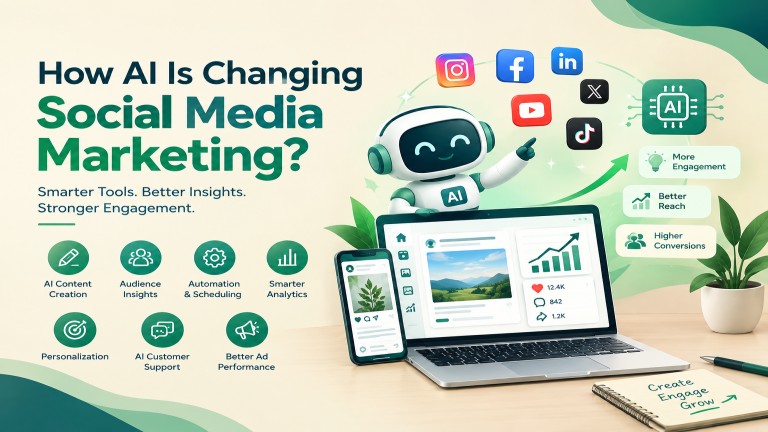
How AI Is Changing Social Media Marketing in 2026 Social media marketing is undergoing a significant transformation with the advent and adoption of Artificial Intelligence (AI). Organizations are leveraging AI-enabled solutions for content creation, consumer audience identification, data mining and analytics, automation and orchestration, and enhancing customer relationships. In the past, social media marketing involved a series of manual processes for carrying out activities such as carrying out research on relevant topics, writing caption, carrying out analytical tasks, and other related areas. With AI, some of the aforementioned processes are being automated and optimized. Nevertheless, it is important to note that while some are arguing that AI is taking over social media marketing, it is actually empowering social media marketers to do more. This paper discusses the impact of AI on social media marketing, benefits, application, challenges, and future prospects of using AI in the field. What Is AI in Social Media Marketing? The use of artificial intelligence (AI) in social media marketing refers to application of various artificial technologies in performing or supporting marketing functions on various online social media networks.AI can be used in social media marketing to carry out extensive data mining, pattern recognition, consumer behavior analysis, and other similar tasks and functions.Therefore, companies can apply AI in various fields related to social media marketing, including: Content creationGeneration of catchy captions and hashtagsCarrying out audience researchScheduling social media postsAnalyzing performanceDeveloping personalized contentProviding customer serviceIdentifying trending topicsSocial listeningImproving advertising The main objective of using AI-powered technologies in social media marketing is to facilitate faster, easier, and more efficient social media marketing process. -7 Ways AI Is Changing Social Media Marketing 1. AI Is Making Content Creation Faster Creating new social media content on a regular basis may prove to be a difficult task. However, with the help of artificial intelligence, marketers will be able to find ideas for content, compose captivating subheadings and headlines for posts, come up with unique ideas for posts and stories, develop scripts, and much more. For instance, instead of having a hard time thinking of a post idea, a company can give an AI a prompt, such as “digital marketing tips for small businesses,” and ask it to generate several ideas. However, one should remember that AI is great at generating content, but it should not be used as a shortcut to creating social media content. Articles created by artificial intelligence should always be reviewed and edited by human writers in order to ensure that the information was presented correctly and transparently. 2. AI Helps Businesses Understand Their Audience Understanding the audience is one of the key success factors in social media marketing. With help of AI, you can analyze the following information about your audience:Their interestsLevel of interactionTypes of content that gain the most engagementReactions and commentsCustomer behaviorPreferences in terms of contentThis data can help you determine what kind of content your audience members are interested in.For instance, if the analysis reveals that your audience likes educational content, but not promotional posts, you will be able to exclude the latter from your social media content strategy. 3. AI Improves Social Media Personalization People react best to messages that are personalized for them. AI could help companies personalize social media. Some people would see different messages, recommendations, or ads, depending on their interests. An example is an online store that recommends products to customers based on their past behavior on the website This helps the business become more personal without having to spend time contacting every customer individually. 4. AI Makes Social Media Scheduling Easier Managing multiple social media platforms can take a lot of time. AI-powered tools can help marketers plan and organize content calendars, identify suitable posting times, and automate parts of the publishing process. A marketer can prepare content in advance and use automation to maintain a consistent posting schedule. This is especially useful for small businesses and marketing agencies that manage multiple social media accounts. However, automation should not remove the human element. Businesses still need to monitor comments, respond to customers, and participate in real conversations. 5. AI Is Improving Social Media Analytics Social media platforms generate a huge amount of data. AI can help marketers analyze this information and identify patterns that may be difficult to find manually. AI-powered analytics can help answer questions such as: Which posts receive the most engagement? Which content formats perform better? What type of audience interacts with our content? Which campaigns generate better results? What topics are becoming popular? These insights can help businesses make data-driven social media decisions instead of relying only on assumptions. 6. AI Is Transforming Customer Support Social media has become an essential platform for engaging with customers. Chatbots and virtual assistants are ideal solutions for responding to frequently asked questions and offering general information. For instance, a company’s virtual assistant can provide a client with the needed information about the company’s opening hours, shipping policies, services, and prices. Moreover, a virtual assistant can quickly reply to some particular questions and provide a client with relevant information. Nevertheless, for some sensitive or complicated issues, a human agent may be necessary to deal with clients. Thus, the application of chatbots and assistants in customer service is a great way to offer a high standard of support. Therefore, in my opinion, the most suitable option is to combine assistants and human support. 7. AI Is Helping With Social Media Advertising AI is also disrupting business processes related to managing social media advertising. The use of AI-powered processes can analyze the data from the ads campaigns, determine their effectiveness and contribution to the specified audiences. Marketers, instead of trying to make sense of all the information by themselves, can benefit from utilizing an AI-powered analysis and concentrate on the campaigns, audiences, and variations that proved to be more effective. Benefits of AI in Social Media Marketing AI can provide several benefits to businesses and marketers. 1. Saves Time AI can automate repetitive tasks and help marketers complete certain activities

SEO vs GEO vs AEO comparison
Uncategorized

SEO vs GEO vs AEO: What Is the Difference?

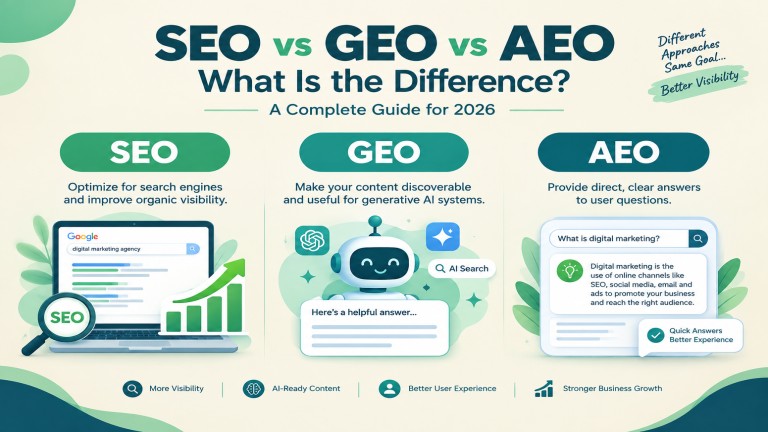
SEO vs GEO vs AEO: What Is the Difference? The way of searching has changed and will continue to change significantly. The user no longer searches only on traditional search engines but also uses Google for finding information and asks Google what they want to find. Answers can be found not only on a set of websites but also in direct answers from search engines. New concepts such as SEO, GEO, and AEO were born due to changes in the way of searching. SEO (Search Engine Optimization), GEO (Generative Engine Optimization), and AEO (Answer Engine Optimization) are three different strategies related to specific purposes. While SEO refers to optimizing a website so that it appears in traditional search engines, GEO is concerned with making content understandable for generative artificial intelligence and getting it included in the search results. On the other hand, AEO focuses on building a knowledge base in such a way that questions posed by users get answered directly. Therefore, what is the difference between SEO, GEO, and AEO? Which of these strategies should be used by the business? What Is SEO? SEO stands for Search Engine Optimization. It refers to the set of actions required to improve search engine visibility through better discovery, understanding, indexing, and ranking of a website’s pages for relevant queries.Traditional SEO tactics may involve a combination of the following:  * Keyword researchProvision of useful and unique contentOn-page optimizationTechnical SEOInternal linking strategyImproving website performance and mobile-friendlinessOptimization of imagesSchema markupAcquiring relevant backlinks and mentionsLocal SEO The purpose of SEO is to increase organic visibility and traffic by boosting the page rank in search engine results. For instance, a digital marketing agency that offers services in India may want their page about “digital marketing agencies in India” to appear when a user types this query. SEO practices will help this company with its organic visibility and traffic. Google announced that SEO basics remain relevant to its new generative search experiences. Why Is SEO Still Important? SEO remains one of the primary tools in digital marketing, as the Internet is where users find products, services, businesses, and information. A properly developed SEO campaign will enable you to drive high-quality organic traffic,increase the website’s visibility and attract new visitors,target those who are interested in your services,build brand authority,and generate leads. What Is GEO?  GEO Stands for Generative Engine Optimization. It refers to a modern practice of optimizing content for the purpose of being found and used by AI-based search and answer systems. These kinds of systems are different from traditional blue links SEO in that they aim to select and summarize content, as opposed to simply linking to it. For instance, one of the common tools that use such technology is the ability to pull relevant information from different sources and present it as an answer. When using GEO, your content has to be optimized to be found, understood, selected, summarized, and cited correctly by AI systems. You can optimize for traditional long-tail SEO keywords, but you would want to go beyond that and aim for creating content that is easy to understand and consumesis properly structured   and supported by facts    provides actual value and is original and addresses specific questions and provides answers that are relevant and easy to extract by both humans and machines. For instance, you could optimize a page not around a broad topic (“digital marketing”) but rather a specific question and answer (“what digital marketing strategies should a small business use in 2026”) and elaborate on the details, give examples, cite other sources, use relevant definitions and much more. Does GEO Replace SEO? GEO should not be treated as a complete replacement for SEO. Google’s 2026 guidance specifically notes that SEO best practices remain relevant for appearing in Google’s generative AI features. Think of GEO as an additional consideration for the changing search environment rather than a replacement for established SEO fundamentals. What Is AEO? AEO stands for Answer Engine Optimization. AEO is about optimizing the content to give it an ability to provide direct and useful answers to the users’ questions. In general, traditional search is about clicking and reading, whereas answer-focused search is about getting information as fast as possible. For example: Question: What is SEO? Answer: SEO is the set of actions of optimizing the website’s visibility in organic search results via content, technical, relevance, and other methods. SEO content creation is the perfect example of an answer-based search because people are looking for answers to their questions. How to Optimize Content for AEO To improve your content for answer-focused searches: Identify common questions your audience asks. Answer each question clearly. Put the answer near the beginning of the relevant section. Use descriptive H2 and H3 headings. Use short paragraphs. Add relevant examples. Use lists and tables where they improve understanding. Keep information accurate and up to date.                                                              However, AEO should not be treated as a completely separate replacement for SEO. Google’s current documentation specifically emphasizes that SEO best practices remain relevant for visibility in its generative AI search features. Is SEO Dead Because of GEO and AEO? No, SEO is not deadas search capabilities extend beyond traditional SEO and into new territory that utilizes AI to provide answers to searchers, with Google stating SEO best practices are still relevant to its generative search features. SEO focuses on making your website easy to find via search, AEO focuses on making sure your content provides answers directly, and GEO focuses on allowing your content to participate in a new type of search experience. Each of these contribute to a more expansive view of modern search strategies. SEO vs GEO vs AEO: Key Differences The easiest way to understand the three concepts is to look at their primary focus. Strategy Main Focus Main Goal SEO Traditional search engines Improve search visibility

AI search engine website optimization guide.
Artificial intelligence

How to Optimize Your Website for AI Search Engines

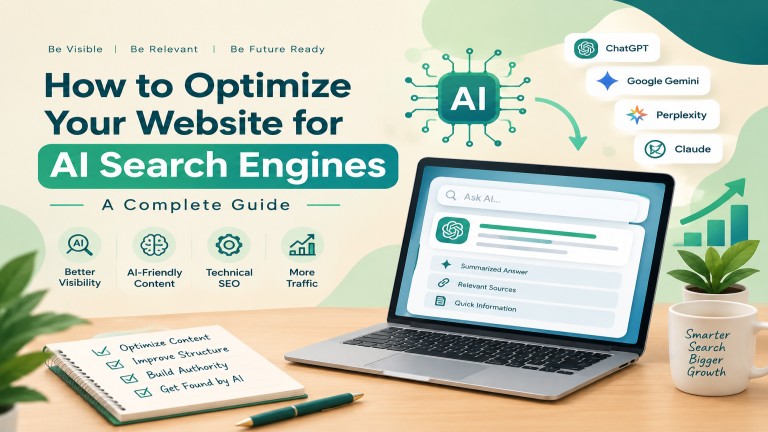
What Are AI Search Engines? AI search engines use large language models to understand a question’s meaning and intent, then generate a direct, synthesized answer — often pulling from several sources at once — instead of simply listing matching webpages. Traditional search engines work mainly by matching keywords and ranking pages using signals like backlinks, relevance, and page quality. You ask a question, and the engine hands you a list of pages it believes can answer it. AI-powered search works differently. Instead of just matching words, it tries to understand the underlying intent behind a question, connect it to related concepts, and pull together information from multiple sources into one coherent response. This is what people mean by conversational search — you can ask a follow-up question the way you would with a person, and the system remembers the context of what you asked before. Some of the most widely used examples of AI-powered search right now include: Google AI Overviews — AI-generated summaries that appear above traditional search results for many queries. ChatGPT search — a conversational interface that can browse the web and cite sources in its answers. Bing AI search (Copilot) — Microsoft’s AI assistant integrated directly into search results. Other AI assistants and browser-based tools that increasingly answer questions using live web content. For businesses, this matters because being the source an AI system chooses to cite or summarize is becoming its own kind of visibility — separate from, but connected to, a traditional page-one ranking. Why AI Search Optimization Matters for Businesses User behavior is changing faster than most websites are adapting to it. More people are asking full questions instead of typing short keyword phrases, and many are getting the answer they need without clicking through to a website at all. That shift has a few real consequences for businesses: Brand visibility now happens inside AI answers, not just search results. If an AI Overview or chatbot answer mentions your brand or links to your content, that’s a form of exposure even without a click. Fewer clicks can mean more qualified traffic. Visitors who do click through after reading an AI summary are often further along in their decision, which can support better-quality leads. Traditional SEO alone may not be enough. Ranking well in classic search results doesn’t automatically mean an AI system will choose to reference your content in its answer. SEO, GEO, and AEO increasingly work as one strategy. Treating them as separate projects usually just duplicates effort. None of this means traditional SEO is going away — the fundamentals of relevance, authority, and user experience still matter enormously. It means the target has expanded to include how AI systems read and represent your website, not just how search engines rank it. How to Optimize Your Website for AI Search Engines Here’s a practical breakdown of the strategies that genuinely support AI search visibility, based on how these systems actually process and select content. 1. Create Helpful and High-Quality Content AI systems are trained to favor content that genuinely answers a question, so the starting point is always the same: write for the person asking, not for an algorithm. Understand the real intent behind a search before you draft anything, and avoid thin, generic, or copied content that doesn’t add anything new. Use real examples, practical tips, and insights drawn from actual experience in your field — content that shows you’ve actually done the thing you’re writing about tends to hold up better over time. 2. Use Clear and Conversational Language Because so many AI searches start as natural questions, your content should read like it’s answering one. Write in simple, direct sentences, use question-based headings where they fit naturally, and lead with a clear answer before going into detail. This makes your page easier for a person to skim and easier for an AI system to extract a usable answer from — the “lede-first” style used in this very guide is a good model to follow. 3. Organize Your Content with Proper Headings Structure is one of the clearest signals you can give both readers and AI systems. Use a logical hierarchy of H1, H2, and H3 headings, keep paragraphs short, and break up dense information with bullet points, numbered lists, and FAQ sections. A well-organized page is easier to scan for humans and easier to segment for machines trying to pull out a specific answer. 4. Implement Structured Data and Schema Markup Structured data is a standardized way of labeling your content — such as marking a paragraph as an FAQ answer or a page as an Article — so search systems can understand it more precisely. Schema types like Article, FAQ, Organization, LocalBusiness, and Product help clarify what your content actually is. It’s worth being realistic here: structured data doesn’t guarantee AI search visibility on its own, but accurate, valid markup removes ambiguity and makes your content easier to interpret correctly. 5. Build Topic Authority with Semantic SEO Semantic SEO is about covering a topic thoroughly rather than chasing a single keyword. Use related terms and concepts naturally throughout your content, build topic clusters of supporting articles around a core subject, and link related pages together. Over time, this pattern helps demonstrate genuine expertise and topical depth — something AI systems tend to weigh when deciding which sources to trust for a given subject. 6. Improve Website Technical SEO None of the above matters much if AI crawlers and search engines can’t actually access and read your site efficiently. Keep page loading speed fast, design for mobile first, and run your site on secure HTTPS. Maintain a clean site architecture with a proper XML sitemap, sensible internal linking, and pages that are genuinely crawlable and indexable. Accessible content — readable text, proper alt attributes, logical markup — also tends to be easier for AI systems to parse correctly. 7. Add Original Data, Expertise, and Real Experiences AI systems, like human readers, tend to favor sources that feel trustworthy

AI-powered SEO strategies in 2026.
Artificial intelligence

How AI Is Changing SEO in 2026: A Complete Guide

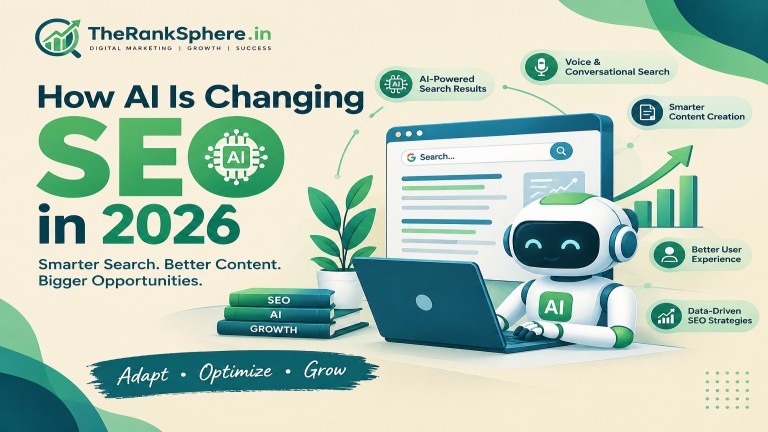
Introduction Search engine optimization (SEO) is changing rapidly, and artificial intelligence (AI) is one of the key drivers of this growth. SEO is no longer confined only to keyword-rich text to appear among the usual blue links. In 2026, search engines will use artificial intelligence to a greater extent than ever before. They will comprehend queries, summarize the key points of documents, identify relevant concepts, and deliver more natural conversational search results. Google’s AI Overviews and AI Mode are excellent illustrations of this development. Google is claiming that classic SEO methods are still effective since they utilize the same core Google Search technologies to find and extract information from websites. For marketers, businesses, bloggers, and media, this implies that besides keywords, relevant content, search intent, expertise, technical SEO factors, and the user’s overall experience need to be considered. Let’s discuss the impact of artificial intelligence on search engine optimization in 2026 and how to prepare your business for it. What Is AI SEO? AI SEO is about harnessing the power of artificial intelligence to optimize various aspects of search engine optimization.The following are the key areas where AI can be used in SEO: Assisting with keyword researchUnderstanding search intentPlanning contentConducting competitive researchOptimizing contentTechnical SEO auditsInternal linking strategiesUpdating contentGenerating SEO reports and analyzing insights However, note that search engines are also using AI to better comprehend the contents on websites and the intent of their users. This means that AI is being utilized in a two-way system; SEO experts are using it to transform their practices, while search engines are using it to enhance their capacities. Search Is Becoming More Conversational Many people are starting to ask more detailed and precise questions rather than using simple keywords For instance, instead of searching “best digital marketing course” someone could ask “What should I learn in digital marketing in 2026 to get a job?” A search engine can understand and respond to an inquiry based on its context more thoroughly. AI Overviews and AI Mode Are Changing Search Results Google’s AI-powered search experiences can provide generated answers along with links to relevant webpages. Google explains that AI Overviews and AI Mode use information retrieved from its Search index to help generate responses and provide links to supporting sources. This means websites may need to think beyond traditional rankings and create content that clearly answers users’ questions. However, there is no separate “AI ranking trick” guaranteed to get a website into these experiences. Google states that its existing SEO best practices remain relevant. AI Is Changing Keyword Research Traditional keyword research was primarily concerned with search volume, competition, and individual keywords.AI enables SEO experts to take a step back and look into the following: Search intentRelated questionsTopic relationshipsLong-tail searchesUser’s issuesContent gapsSemantic relationshipsInstead of targeting individual search terms, businesses can optimize their topics and create in-depth content that will be found by users looking for solutions to different problems. Google also confirms that there is no need to attempt to cover every possible variation of a keyword when it comes to generative AI search. Focus on Search Intent A successful 2026 SEO strategy is focused on asking yourself the question: “What can the user actually accomplish on my page?” A search query can basically be divided into 4 categories: informational, navigational, commercial, transactional intent. By focusing on search intent, you can optimize your content in a way that actually provides value to the user instead of just randomly shoving keywords onto a page. AI Is Transforming Content Creation AI can help to make content creation faster. Marketers can use AI to brainstorm, plan, summarize, optimize readability, and fill in missing topics. However, AI-generated content should not be published without human editing. Google notes that using generative AI is not explicitly prohibited. However, creating large volumes of content with little or no original value may violate Google’s spam policies. The best practice is to combine AI, human expertis  and  original value. For instance, instead of simply asking an AI to write an article on SEO, you could request additional original examples, expert opinions, personal experiences, case studies, data, unique insights, and recommendations. Google’s latest guidelines stress the importance of creating valuable and unique content that goes beyond commodity articles that could be created by anyone on the same topic. Technical SEO Still Matters in the AI Era AI does not eliminate technical SEO. Search engines need to crawl, understand, and index your website. Technical SEO factors include the following:   Website Crawlability Ensuring that search engine crawlers can access critical pages. Mobile-Friendly Design Your website should work properly across smartphones, tablets, and desktops. Page Experience Fast loading, clear navigation, readable content, and a good user experience remain important. Internal Linking Connect related pages using useful internal links. This helps users and search engines understand the relationship between your content. Google’s guidance for generative AI search specifically continues to emphasize crawlability, indexing, technical requirements, JavaScript SEO, page experience, and reducing unnecessary duplicate content. E-E-A-T and Original Content Are Becoming More Important In an AI-driven content environment, the internet can become filled with similar automatically generated articles. This makes originality and credibility increasingly important.E-E-A-T stands for: Experience Expertise Authoritativeness Trustworthiness To improve your content: Show who created the content. Use reliable sources. Include real examples. Share first-hand experience when appropriate. Keep important information updated. Avoid unsupported claims. The goal should be to create content that people find genuinely useful and trustworthy. How to Optimize Content for AI Search There is no guaranteed formula for appearing in AI-generated search results. However, Google’s current guidance provides several practical principles.  Create People-First Content Write for your audience first—not solely for search engines.  Answer Questions Clearly Use descriptive headings and provide direct answers before expanding on the topic.  Add Original Information Give readers something they cannot easily find by reading five other generic articles. Use Images and Videos Relevant, high-quality visual content can provide additional ways for users to discover and understand your website. Maintain Technical SEO Make sure important content

Scroll to Top